
Wordpress
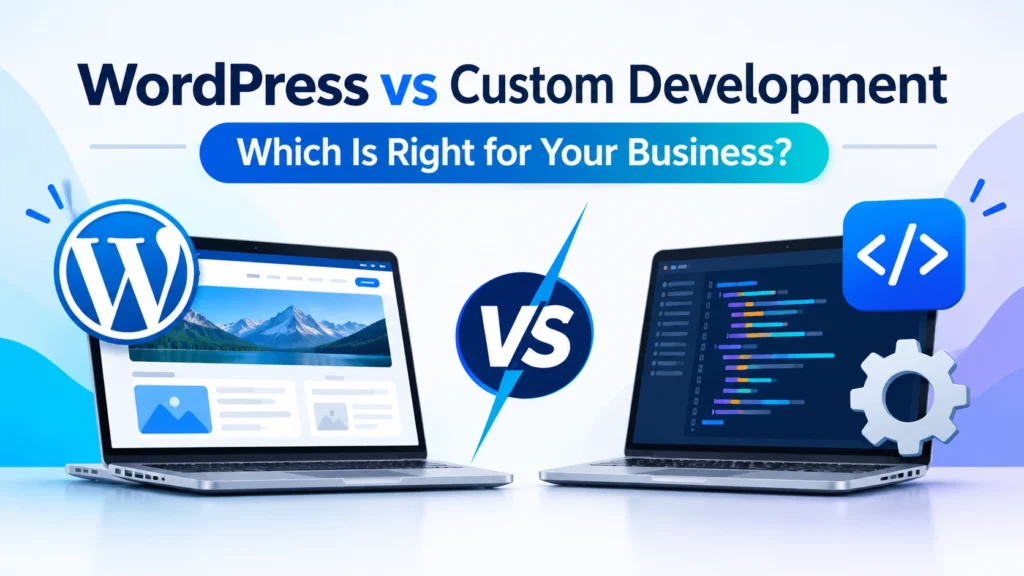
WordPress v/s Custom Development: Which One Is Right for Your Business?
Not sure whether to choose WordPress or a fully custom-built solution? Explore the advantages, limitations, costs, and ideal use cases to determine…
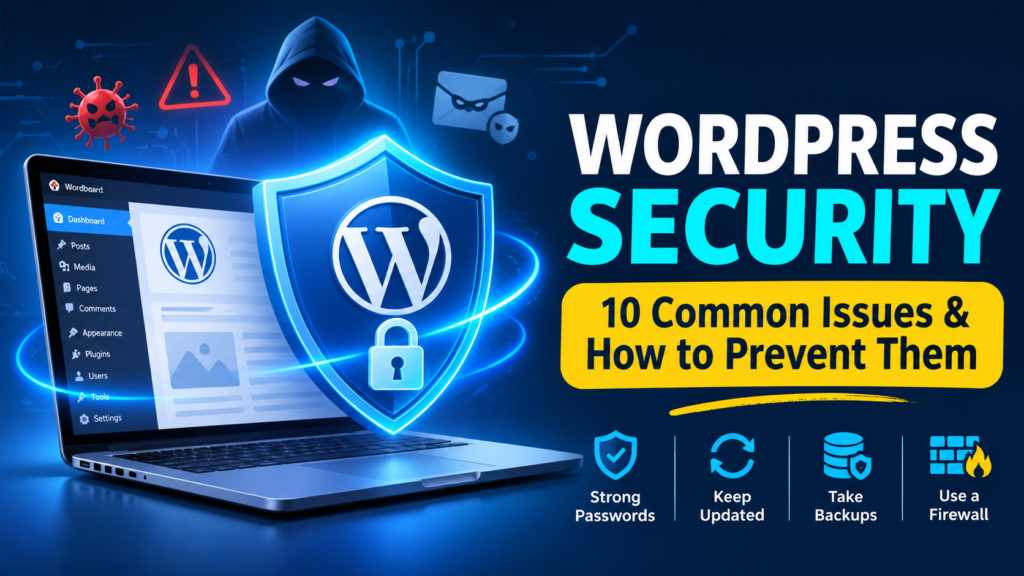
WordPress is one of the most popular platforms for building websites, blogs, and online stores. Its flexibility, extensive plugin ecosystem, and customization options make it a preferred choice for businesses of all sizes.
However, like any website platform, WordPress websites can face security threats if they are not properly maintained and protected.
WordPress security issues can lead to malware infections, unauthorized access, stolen information, website downtime, and damage to your business reputation. Even a small security weakness can create opportunities for attackers to compromise your website.
The good news is that most common WordPress security risks can be reduced with proper security practices, regular updates, strong authentication, and continuous monitoring.
In this guide, we will explore the most common WordPress security issues and practical ways to prevent them.
Your website represents your business online. Customers may use it to explore your services, submit contact forms, create accounts, or make purchases.
If your website is compromised, it can affect both your business operations and customer trust.
Here are some reasons why WordPress security is important:
Website security should be an ongoing process rather than a one-time task.
Let’s look at some common security problems that can affect WordPress websites and how you can protect your website against them.
Weak passwords are one of the easiest ways attackers can gain access to a WordPress website.
Using simple passwords such as “admin123” or reusing the same password across multiple websites increases the risk of unauthorized access.
Attackers may also use automated brute-force attacks to try different username and password combinations until they find valid login credentials.
How to prevent it:
Strong authentication is one of the most important steps in protecting your WordPress dashboard.
Running outdated WordPress software can expose your website to known security vulnerabilities.
WordPress regularly releases updates that include security fixes, bug fixes, and improvements. Plugin and theme developers also release updates to address vulnerabilities and compatibility issues.
If updates are ignored, attackers may exploit weaknesses in outdated software.
How to prevent it:
Regular updates help reduce security risks and keep your website running smoothly.
Plugins extend WordPress functionality, but installing too many plugins or using poorly maintained plugins can increase your website’s attack surface.
A plugin may contain security vulnerabilities due to insecure coding, outdated dependencies, or improper data validation.
Even a trusted plugin can become vulnerable if it is not updated.
How to prevent it:
Remember that plugin quality and maintenance are more important than simply counting how many plugins your website uses.
Malware is harmful software that can infect your website and perform unauthorized activities.
A compromised WordPress website may contain malicious scripts, suspicious files, spam links, or redirects to unsafe websites.
Malware infections can also affect website visitors and damage your business reputation.
How to prevent it:
If your website is already infected, avoid deleting random files. Identify the source of the infection and clean the website carefully.
SQL injection and cross-site scripting (XSS) are common web application security vulnerabilities.
SQL Injection: Attackers attempt to insert malicious SQL commands through improperly handled user input. This may expose or manipulate database information.
Cross-Site Scripting (XSS): Attackers inject malicious scripts into website content or input fields. These scripts may execute in visitors’ browsers.
These vulnerabilities can occur in custom code, themes, plugins, and poorly secured integrations.
How to prevent it:
Developers should follow WordPress coding standards and secure development practices when building custom functionality.
Incorrect file permissions can allow unauthorized users or processes to modify important website files.
Sensitive configuration files may also expose information if they are not properly protected.
For example, your WordPress configuration file contains database connection details and other important settings.
How to prevent it:
wp-config.php file.For many standard WordPress hosting environments, commonly used permissions are 755 for directories and 644 for files. However, your hosting provider’s security requirements should take priority.
Backups are essential for recovering your website after unexpected security incidents, server failures, or accidental changes.
Without a reliable backup, restoring a compromised or damaged website can become difficult and expensive.
How to prevent it:
A backup is useful only when it can be restored successfully.
An SSL/TLS certificate helps encrypt information transferred between your website and its visitors.
Without HTTPS, sensitive information submitted through forms or login pages may be exposed to interception, particularly on insecure networks.
How to prevent it:
HTTPS is an important part of website security, but it does not protect a website against malware, vulnerable plugins, or unauthorized access by itself.
WordPress provides different user roles, including Administrator, Editor, Author, Contributor, and Subscriber.
Assigning unnecessary administrative permissions can increase security risks.
For example, a person who only needs to publish blog posts should not automatically receive full administrator access.
How to prevent it:
Following the principle of least privilege helps reduce the impact of compromised accounts.
Even a properly configured website can face new security threats over time.
Without regular monitoring, suspicious login attempts, malware infections, unexpected file changes, and unusual website activity may go unnoticed.
How to prevent it:
Continuous monitoring helps identify potential problems before they become more serious.
In addition to preventing the issues mentioned above, follow these essential WordPress security practices:
| Security Practice | Why It Matters |
|---|---|
| Enable two-factor authentication | Adds another layer of login protection |
| Use a Web Application Firewall (WAF) | Helps filter malicious web traffic |
| Keep software updated | Addresses known security vulnerabilities |
| Use trusted plugins and themes | Reduces risks from poorly maintained software |
| Schedule regular backups | Helps restore your website after incidents |
| Use secure hosting | Provides server-level security protection |
| Limit user permissions | Reduces unnecessary access |
| Monitor website activity | Helps identify suspicious behavior |
| Use HTTPS | Encrypts data transferred between visitors and your website |
| Remove unused components | Reduces unnecessary attack surfaces |
No single security measure can guarantee complete protection. A combination of preventive controls, monitoring, and regular maintenance provides stronger protection.
If you suspect that your WordPress website has been compromised, take action as soon as possible.
Follow these steps:
If the attack involves customer information, payment data, or other sensitive information, follow applicable legal and regulatory notification requirements.
Do not assume that changing your password alone will completely remove a malware infection.
WordPress security is not a one-time setup. New vulnerabilities, software updates, configuration changes, and emerging threats make ongoing maintenance important.
A regular WordPress maintenance plan can help you:
For businesses that depend on their websites for leads, sales, and customer communication, regular maintenance can help protect their online operations.
WordPress is a powerful platform, but website security should never be ignored.
Weak passwords, outdated plugins, malware infections, vulnerable custom code, and poor server configurations can expose your website to unnecessary risks.
By following the right WordPress security practices, keeping software updated, using strong authentication, maintaining regular backups, and monitoring website activity, you can significantly reduce common security risks.
Remember: Website security is an ongoing responsibility, not a one-time task.
Keeping a WordPress website secure requires regular updates, monitoring, backups, and technical expertise.
At DevOrbit Technologies, we help businesses maintain and protect their WordPress websites through professional WordPress security and maintenance services.
Whether you need a security review, malware cleanup, ongoing maintenance, or website protection, our team can help you keep your website secure and reliable.
Explore our services:
Contact DevOrbit Technologies to discuss your WordPress website security requirements.
Continue exploring more insights from DevOrbit Technologies.
Not sure whether to choose WordPress or a fully custom-built solution? Explore the advantages, limitations, costs, and ideal use cases to determine…
A business website is more than just an online presence-it’s a powerful marketing tool that helps attract visitors, generate leads, and grow…
Building a professional website is one of the most important investments for any business. Whether you’re launching a startup, redesigning an existing…